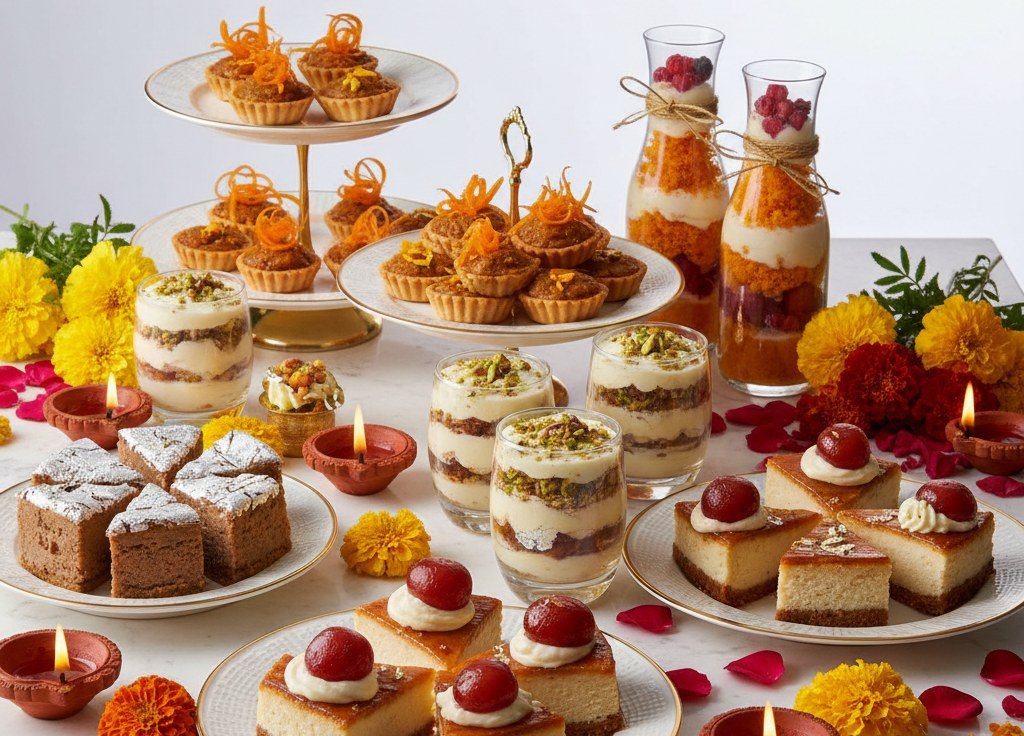
There’s something magical about Diwali—the lights, laughter, and, of course, the irresistible aroma of sweets wafting through the air. Traditionally, Diwali has always been synonymous with mithai—gulab jamun, kaju katli, laddoos, and barfis of every color and flavor. But as times have changed, so have our palates. Enter fusion Diwali desserts, where ancient flavors dance with modern flair.
Fusion sweets are not just about innovation—they’re about storytelling. Each dessert bridges generations, bringing grandma’s recipes into millennial kitchens. Imagine Gulab Jamun Cheesecake, Rasmalai Tiramisu, or Gajar Halwa Tartlets—each a delicious ode to nostalgia, yet plated with global sophistication.
In today’s culinary world, Diwali sweets are no longer confined to silver foils and traditional trays. They’re found layered in glass jars, swirled with mascarpone, topped with edible gold dust, or infused with international techniques. This fusion isn’t just aesthetic—it’s emotional, blending tradition with creativity in every bite.
The Evolution of Diwali Sweets
Diwali and the Timeless Love for Mithai
For centuries, sweets have symbolized more than just indulgence during Diwali—they represent joy, togetherness, and prosperity. Every household has its own tradition: laddoos made by hand, gujiya stuffed with khoya, or halwa simmering patiently on the stove. Mithai has always been an essential offering to the gods and a sweet gesture to loved ones.
Yet, in modern India, with the rise of global influences and urban lifestyles, home cooks and pastry chefs are experimenting with textures, techniques, and flavors that merge tradition with trend. The result? Fusion desserts that still feel like Diwali, but taste like the world.
The Rise of Fusion Desserts in Indian Festivities
The concept of fusion cuisine isn’t new—but its influence on Indian festivals has grown massively in the last decade. Global exposure through travel, social media, and culinary shows has sparked creativity among dessert lovers. Suddenly, people began asking, What if tiramisu had a touch of saffron syrup? What if cheesecake could carry the warmth of cardamom?
Fusion Diwali desserts represent this cultural evolution—they allow Indian sweets to evolve without losing their soul. It’s a celebration of culinary curiosity wrapped in nostalgia.
What Makes Fusion Desserts So Special?
The Perfect Marriage of East and West
Fusion desserts are like perfect love stories—they bring together two contrasting worlds and make them work in harmony. Take the Gulab Jamun Cheesecake—it marries the richness of Indian syrupy dough balls with the creamy luxury of a New York cheesecake. The result? A flavor explosion that feels both familiar and new.
These desserts are special because they respect both origins. They don’t erase tradition; they enhance it. The key lies in balance—knowing how much cardamom to add, how sweet to make the syrup, or how to integrate Western techniques without overwhelming Indian essence.
The Role of Ingredients, Texture, and Presentation
Fusion desserts thrive on contrast—soft and crunchy, warm and cold, rich and airy. Ingredients like mascarpone, cream cheese, or puff pastry are now comfortably sharing the spotlight with Indian staples like ghee, rose water, and saffron.
Presentation plays an equally vital role. Traditional sweets often come in bite-sized cubes or rounds, while fusion creations embrace plating artistry—think elegant tartlets, deconstructed parfaits, or layered mousse cups. A touch of edible silver, a sprinkle of pistachio dust, or a drizzle of rose syrup can turn a simple sweet into a showstopper.
How Fusion Appeals to Modern Taste Buds
Modern palates crave complexity and freshness. The heavy sweetness of traditional mithai doesn’t always appeal to everyone today. Fusion desserts solve this by incorporating lighter textures, tangy elements, and refined sugar control. A saffron panna cotta or thandai macaron feels indulgent yet sophisticated.
It’s about reinventing nostalgia for the next generation—people who grew up loving laddoos but now enjoy tiramisu. Fusion sweets connect both worlds beautifully.
Gulab Jamun Cheesecake – Creamy Meets Syrupy Bliss

Origin of the Dessert Idea
Gulab jamun has been the heart of Indian dessert culture for decades. Cheesecake, on the other hand, is the Western world’s creamy indulgence. So, what happens when you merge them? You get the Gulab Jamun Cheesecake—a dessert that’s rich, creamy, and soaked in syrupy nostalgia.
This creation likely began in boutique bakeries that wanted to modernize mithai. Soon, it became a Diwali sensation. It’s everything you love about gulab jamun—its aroma, warmth, and syrup—enhanced by a cheesecake’s creamy base.
Step-by-Step Concept Breakdown
The magic begins with a biscuit or pistachio crust, followed by a cardamom-infused cream cheese layer. Small gulab jamuns are halved and nestled within the creamy layer before the cake sets. Once chilled, a drizzle of rose syrup or saffron glaze adds that final Indian touch.
Texture is key—the base offers crunch, the cheesecake brings smoothness, and the gulab jamuns provide that soft, syrupy burst.
Flavor Profile and Serving Suggestions
This dessert is best served slightly chilled, garnished with edible rose petals and chopped pistachios. It pairs beautifully with chai or a light sparkling drink. Each bite feels like a fusion of cultures, where sweetness finds new expression without losing authenticity.
Rasmalai Tiramisu – India Meets Italy in a Dessert Bowl

Why Rasmalai Tiramisu Works So Well
Rasmalai and tiramisu share something in common—they both rely on soaked layers for their signature texture. That’s why they fuse effortlessly. Replace coffee with saffron milk, mascarpone with a hint of cardamom, and ladyfingers with rasgulla slices, and you’ve got a genius dessert.
Creative Layering Techniques
To create perfect balance, alternate layers of soft rasmalai, saffron milk, and sweetened mascarpone cream. Dust with crushed pistachios and edible silver. When chilled overnight, the flavors blend beautifully, offering a dessert that’s airy, aromatic, and celebratory.
Perfect Pairings for this Royal Fusion Treat
Serve it in glass jars or elegant dessert cups. Pair it with masala chai or even a light dessert wine for dinner parties. It’s royal, indulgent, and instantly festive—a dish that wins hearts across generations.
Gajar Halwa Tartlets – A Modern Take on a Winter Classic

Reinventing the Iconic Gajar Ka Halwa
Gajar ka halwa is a winter staple, and turning it into a tartlet brings modern sophistication to the table. The halwa’s richness balances perfectly with a buttery tart shell. Imagine biting into crisp pastry filled with warm, spiced carrot halwa and topped with whipped cream or nuts.
Tart Shell Variations and Garnishing Ideas
You can use shortcrust pastry, almond flour crust, or even phyllo shells for variation. Garnish with toasted nuts, edible gold leaf, or cardamom whipped cream. Serve warm or chilled—either way, it’s a festive hit.
Balancing Sweetness and Texture
Since halwa is naturally rich, reducing sugar and balancing with tangy toppings like yogurt mousse or ricotta helps avoid heaviness. These tartlets prove that innovation doesn’t mean compromise—it’s about balance.
Motichoor Parfait – A Layered Symphony of Colors and Flavors

The Art of Layering Indian Flavors
Motichoor laddoo is the quintessential Diwali sweet—vibrant, fragrant, and irresistible. But when you deconstruct it into a parfait, it becomes a work of edible art. A Motichoor Parfait combines the traditional sweetness of laddoos with creamy layers of mousse, custard, or yogurt. It’s the perfect dessert to showcase in elegant glassware during Diwali gatherings.
The key to this dessert lies in its layering technique. Start with a base of crushed laddoo, followed by a light saffron mousse or whipped cream, and repeat the process to form alternating layers. Each layer carries texture—soft, creamy, and grainy—all blending into one delightful bite. It’s visually stunning, festive, and makes every spoonful a celebration.
Pairing Motichoor with Creams and Mousses
What makes the Motichoor Parfait so special is how it pairs beautifully with diverse flavors. You can balance the laddoo’s richness with rose-flavored mousse, cardamom custard, or even Greek yogurt for a lighter touch. Top it off with crushed pistachios, dried rose petals, or edible gold foil for that luxurious finish.
For a refreshing variation, add a hint of citrus by folding in orange zest or a drizzle of saffron syrup between layers. This creates a flavor burst that makes the dessert both indulgent and balanced.
Tips to Make It Look Insta-Worthy
Presentation is half the fun of this fusion dessert. Use transparent glass jars or mini dessert cups to highlight the layers. Garnish with gold-dusted boondi, edible flowers, or even a small laddoo on top. Play with color—orange, white, and green—for a subtle nod to Indian pride. The best part? It’s make-ahead friendly, so your Diwali table looks effortlessly elegant.
More Fusion Dessert Inspirations for Diwali
Jalebi Ice Cream Sandwich

A creative collision of hot and cold, the Jalebi Ice Cream Sandwich is a dessert lover’s dream. Two crispy, syrupy jalebis sandwich a scoop of saffron or cardamom ice cream. The contrast of crunchy and creamy textures makes this dessert truly addictive. Sprinkle crushed pistachios or drizzle rose syrup for an extra flair.
Kesar Panna Cotta with Pistachio Brittle

If you love refined desserts, Kesar Panna Cotta is your go-to fusion choice. This Italian classic takes an Indian twist with saffron, cardamom, and a hint of rose. Served with pistachio brittle or almond praline, it’s delicate yet deeply flavorful. The smooth, silky texture of the panna cotta perfectly complements the crunch of the brittle.
Thandai Macarons and Saffron Mousse Cups

Macarons are elegant on their own, but infusing them with Thandai flavors—like fennel, cardamom, and saffron—turns them into festive masterpieces. Pair them with Saffron Mousse Cups for a dual dessert offering that screams celebration. These are the perfect bite-sized indulgences for gifting or dessert platters.
Ingredients That Bridge Tradition and Innovation
Using Indian Spices in Modern Desserts
Spices are the heartbeat of Indian sweets. Cardamom, saffron, cinnamon, and nutmeg add depth and aroma that no essence can replicate. When used thoughtfully, they elevate Western desserts into something magical. For instance, adding a dash of cardamom to cheesecake or saffron to mousse instantly brings an Indian soul to the dish.
The Importance of Ghee, Cardamom, and Rose Water
These traditional ingredients are the pillars of fusion dessert success. Ghee provides richness, cardamom adds warmth, and rose water offers a floral elegance. They can be seamlessly incorporated into cakes, creams, and pastries for that authentic Indian undertone. Imagine a crème brûlée with a hint of rose water or a shortbread crust brushed with ghee—it’s tradition meeting finesse.
Western Ingredients that Enhance Indian Flavors
On the flip side, Western ingredients like mascarpone, cream cheese, and puff pastry open doors to new textures and styles. Mascarpone pairs beautifully with rasmalai, cream cheese complements gulab jamun, and puff pastry can elevate even simple halwas into high-end tarts. These elements allow you to play with form while staying true to Indian flavor roots.
Presentation Matters – The Aesthetics of Fusion Desserts
How to Plate and Decorate Like a Pro
A dessert’s first impression is visual, and with fusion sweets, presentation is everything. Think elegant plating—gold trays, glass cups, marble platters, or traditional brass bowls with a modern twist. You can use textures like whipped cream swirls, nut dust, and rose petals for garnish.
For a striking look, layer desserts in transparent glasses to showcase color contrasts. Adding edible gold leaf or silver foil instantly elevates the dish, making it Diwali-worthy. Fusion sweets should look luxurious and feel festive at the same time.
Playing with Colors, Textures, and Garnishes
Indian desserts are known for their vibrant hues—saffron yellow, rose pink, pistachio green, and deep orange. Use these colors intentionally to create a visual feast. Pair bright elements with neutral tones for balance. Textures, too, make a difference—combine creamy mousses with crunchy pralines or soft halwa with crisp shells.
Finish each creation with thoughtful garnishes like candied nuts, edible flowers, or fruit coulis. It’s all about turning a traditional sweet into a statement piece on your Diwali table.
Healthier Twists on Fusion Diwali Desserts
Using Natural Sweeteners and Low-Fat Options
Health-conscious doesn’t have to mean flavorless. Replace sugar syrups with honey, jaggery, or dates for natural sweetness. Opt for low-fat cream cheese, Greek yogurt, or coconut milk in recipes that require cream or mascarpone. This not only lightens the dessert but also adds a nuanced flavor.
For instance, a jaggery-based gulab jamun cheesecake or a dates-and-almond energy parfait can be guilt-free indulgences. The goal is to retain the festive spirit without overloading on sugar or fat.
Gluten-Free or Vegan Fusion Dessert Ideas
Diwali should be inclusive, and modern desserts are embracing that idea. Try almond flour tart shells, oat-based crusts, or coconut milk panna cotta for gluten-free or vegan alternatives. You can also make vegan versions of gajar halwa using coconut oil instead of ghee.
The best part? These variations taste just as delicious—sometimes even better. Fusion isn’t just about combining cuisines; it’s also about adapting traditions for everyone to enjoy.
Hosting a Fusion Dessert Table for Diwali
How to Curate a Dessert Menu
A great Diwali dessert table should have variety—something creamy, something crunchy, and something traditional. Combine a Gulab Jamun Cheesecake, Motichoor Parfait, and Kesar Panna Cotta for a perfectly balanced spread. Offer bite-sized servings so guests can sample multiple desserts without feeling heavy.
Themed Table Décor and Pairings
Decorate your dessert table with fairy lights, candles, and gold accents to reflect the festive spirit. Add floral elements like marigolds or rose petals for a touch of tradition. You can pair each dessert with beverages like saffron milk, herbal tea, or even light mocktails. The harmony between flavor and décor makes the entire experience unforgettable.
Tips for Balancing Flavors Across Dishes
Balance is key—don’t overload on rich or syrupy desserts. Pair heavy sweets with lighter ones. For example, a rich Rasmalai Tiramisu can be followed by a refreshing Thandai Macaron. Always keep variety in flavor profiles—sweet, nutty, floral, and tangy—for a complete sensory journey.
The Cultural Significance of Reinventing Traditional Sweets
Respecting Heritage While Embracing Innovation
Every fusion dessert tells a story—a story of how tradition meets evolution. Reinventing Diwali sweets isn’t about replacing age-old recipes; it’s about keeping them alive through reinvention. Our grandmothers may have never imagined gulab jamuns sitting atop cheesecakes, but the essence of the mithai remains the same—sweetness shared with love.
When we create fusion desserts, we celebrate both our roots and our openness to global culture. It’s a reflection of India today—a blend of heritage and modernity. Each bite of a Rasmalai Tiramisu or Gajar Halwa Tartlet becomes a bridge between generations. Older family members recognize the flavors they’ve always cherished, while the younger ones are drawn to the global presentation and texture.
In a way, fusion desserts become cultural ambassadors—honoring the essence of traditional mithai while telling a new story in the language of modern cuisine.
How Fusion Sweets Reflect the Global Indian Identity
The modern Indian palate has become more adventurous and cosmopolitan. We’re now a generation that enjoys sushi for lunch, pasta for dinner, and jalebi with ice cream for dessert. Fusion sweets embody this global Indian spirit—proudly rooted in culture yet open to innovation.
Whether it’s a pastry chef in Paris using saffron and cardamom or a home baker in Mumbai experimenting with mascarpone and ghee, these desserts highlight India’s growing influence on world gastronomy. They’re proof that tradition isn’t static—it evolves, and it thrives when reimagined.
So, as Diwali lights shimmer around us, these fusion creations remind us that the sweetest traditions are the ones that continue to grow, adapt, and inspire.
Diwali Dessert Trends for 2025
What’s New in Home Kitchens and Bakeries
As we move into 2025, the world of Diwali desserts is more creative than ever. Home bakers and professional pastry chefs alike are experimenting with textures, global ingredients, and presentation styles that push boundaries while celebrating culture.
This year, expect to see air-fried mithai, vegan laddoos, and desserts served in personalized jars. Instagram-worthy creations like Motichoor Mousse Shots, Rasmalai Cheesecake Bars, and Biscoff Gulab Jamun Cups are already making waves. The emphasis is on visual appeal and convenience—desserts that are portable, elegant, and easy to serve during festive parties.
Traditional flavors like kesar, cardamom, rose, and pistachio remain timeless, but there’s a growing trend toward fusion with international tastes like matcha, coffee, chocolate, and citrus. It’s a melting pot of creativity that reflects how Diwali celebrations are becoming more inclusive, contemporary, and globally inspired.
Trending Flavors and Aesthetic Styles
When it comes to flavor trends, 2025 is all about balance and sensory play. Think desserts that are not overwhelmingly sweet but rich in aroma and color. Popular combinations include saffron-vanilla, rose-chocolate, and cardamom-orange. Texture is a big focus too—desserts that offer crunch, smoothness, and a touch of indulgence in every bite.
Aesthetically, minimalism is in. Bakers are leaning toward clean designs, modern plating, and gold accents rather than heavy decorations. Transparent jars, mirror glazes, and geometric tart shells are trending styles. And with sustainability in focus, many prefer eco-friendly packaging and natural colorants like beetroot, turmeric, and spinach for festive desserts.
In short, Diwali 2025 promises sweets that are beautiful, balanced, and globally inspired—a true reflection of modern India’s vibrant culinary spirit.
Conclusion – Sweetness That Connects the Past and Present
Diwali desserts have always been the soul of the festival, but fusion desserts take that sweetness to new dimensions. They allow us to celebrate tradition while embracing innovation—a beautiful duality that defines the modern Indian identity. Whether it’s a Gulab Jamun Cheesecake, Rasmalai Tiramisu, or Motichoor Parfait, each dessert connects the nostalgia of the past with the creativity of today.
These fusion creations are not about replacing old favorites but reimagining them with a contemporary flair. They invite conversations, spark joy, and bring together families from all generations around the table. From the careful layering of saffron mousse to the delicate crunch of pistachio brittle, every bite is a reminder that the sweetness of Diwali isn’t just in the dessert—it’s in the experience.
So, this festive season, light up your kitchen with creativity. Blend your grandmother’s recipes with your own imagination and craft something that’s uniquely yours. After all, Diwali is about spreading light, love, and sweetness—and what better way than with desserts that taste like tradition and look like art?
FAQs
1. What are some easy fusion desserts I can make for Diwali?
You can start with simple yet impressive creations like Gulab Jamun Cheesecake, Rasmalai Tiramisu, or Motichoor Parfait. For something lighter, try Kesar Panna Cotta or Thandai Macarons—these are quick to assemble and look elegant.
2. How do I balance traditional flavors in modern recipes?
The secret lies in moderation. Use strong Indian flavors like cardamom or rose water sparingly so they complement, not overpower, the dessert. Combine them with neutral or creamy bases like mascarpone, vanilla custard, or cream cheese.
3. Can fusion desserts be made ahead of time?
Yes! Most fusion desserts—especially cheesecakes, mousse cups, and parfaits—taste even better when chilled overnight. They’re great make-ahead options for parties and gatherings.
4. What are the best garnishes for Indian fusion sweets?
Try crushed nuts, edible flowers, gold leaf, rose petals, or silver varq. You can also use a light drizzle of saffron syrup or rose glaze to enhance the appearance and aroma.
5. Are fusion Diwali desserts suitable for gifting?
Absolutely. Pack them in mini glass jars, tins, or eco-friendly boxes. Choose desserts that travel well, like barfi truffles, mousse jars, or bite-sized tartlets. They make thoughtful and stylish festive gifts.