When spring comes to Assam, the fields turn green and people get ready to celebrate Bihu. Bihu is a group of festivals that mark important farming seasons. One of the most loved festivals is Magh Bihu, the harvest festival.
During this time, families prepare many traditional foods, and Til Pitha is one of the most special. It is not just a sweet dish—it is a symbol of love, tradition, and togetherness that has been passed down for generations.
What is Til Pitha?
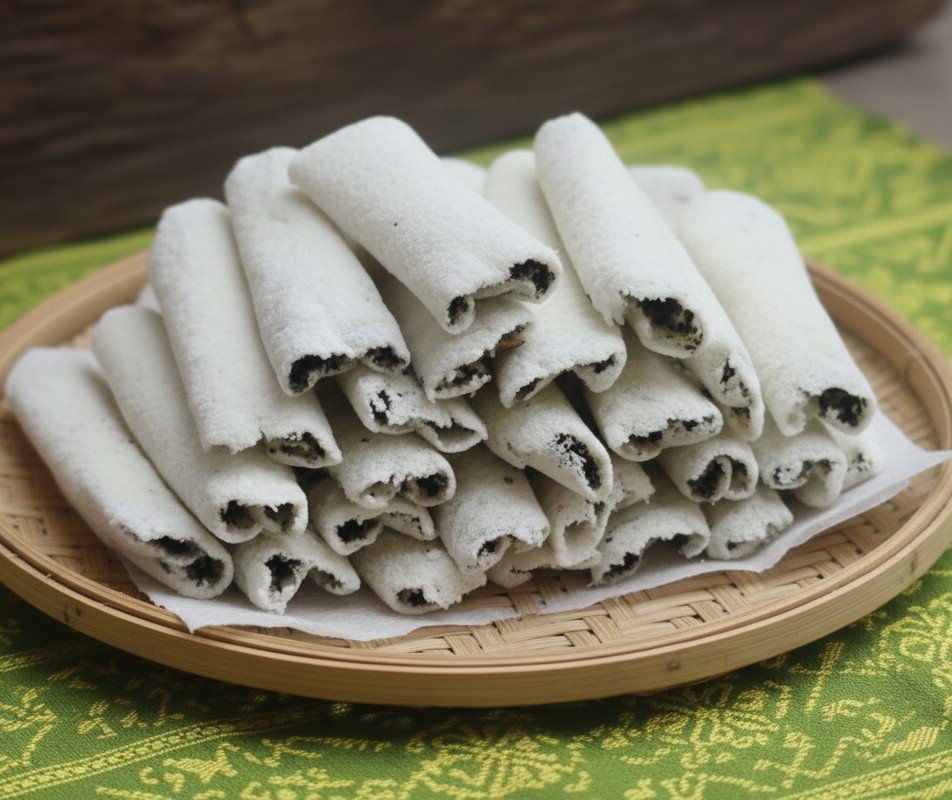
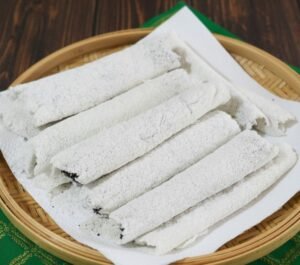
Til Pitha is a thin rice pancake rolled with a sweet filling inside. The filling is made from roasted black sesame seeds (til) and jaggery (gur).
The outside layer is soft and delicate, while the inside is sweet, nutty, and full of flavor. One bite gives a warm and comforting taste that many people in Assam grow up loving.
Simple Ingredients, Special Taste
Til Pitha is made using only a few ingredients:
-
Bora Saul (sticky rice): This special rice is used to make the thin outer layer. It is sticky, soft, and does not break easily.
-
Black sesame seeds (Til): These give a rich, nutty taste and a lovely smell.
-
Jaggery (Gur): This natural sugar adds sweetness and a light caramel flavor.
First, the rice is soaked and ground into a fine flour with just the right amount of moisture. Then the sesame seeds are roasted, crushed, and mixed with jaggery to make the sweet filling.
Understanding Sesame Seeds (Til)
Sesame seeds may be small, but they’re the soul of Til Pitha. Traditionally, white sesame seeds are used because they have a mild, nutty flavor that blends beautifully with jaggery. Black sesame seeds are more intense and slightly bitter, so they’re rarely used in the classic recipe. Choosing fresh sesame seeds is crucial—old seeds can smell stale and ruin the entire filling.
Roasting sesame seeds is where the magic happens. This step requires your full attention. The seeds should be roasted on low heat, stirred continuously, and removed from the pan as soon as they start popping and releasing their aroma. Over-roasting turns them bitter, while under-roasting leaves them raw and flavorless. You’re aiming for golden, fragrant seeds that crunch lightly between your teeth.
Sesame seeds aren’t just delicious; they’re nutritional powerhouses. Rich in healthy fats, calcium, iron, and antioxidants, they’re especially beneficial during winter months. That’s one of the reasons Til Pitha is traditionally eaten during Magh Bihu—it warms the body from within. When ground or lightly crushed after roasting, sesame seeds release natural oils that enhance both texture and flavor of the filling.
Making Til Pitha on the Tawa
The most interesting part is cooking the pitha.
A small amount of rice flour is spread on a hot flat pan (tawa) without oil. It slowly turns into a very thin sheet. Before it becomes fully dry, some filling is placed in the center. Then it is gently rolled into a thin cylinder.
This step needs practice, speed, and care. Skilled hands can make perfect pithas that look simple but beautiful.
More Than Just a Sweet Dish
During Bihu, making Til Pitha is a family activity. Women gather in the kitchen, talk, laugh, and prepare pithas together. Grandmothers teach their daughters and granddaughters the traditional method.
The sweet smell of sesame and jaggery fills the house and creates a festive feeling.
Til Pitha is often served with hot Assam tea and offered to guests as a sign of respect and warmth.
A Taste of Assam’s Tradition
Today, life is fast and people often choose easy food. But Til Pitha reminds us of slow cooking, family time, and cultural pride.
Every bite carries the taste of Assam’s land, its farming roots, and the love of its people. When you eat Til Pitha, you are not just enjoying a sweet—you are tasting a piece of history and tradition.
Health Benefits of Til Pitha
Til Pitha is surprisingly nutritious. Sesame seeds provide healthy fats, protein, and minerals, while rice offers energy. Jaggery adds iron and aids digestion. It’s a winter-friendly food that warms the body and satisfies cravings naturally.
PrintTil Pitha Recipe | Sweet of Assam’s Bihu Festival
- Prep Time: 30 minutes
- Cook Time: 20 minutes
- Total Time: 50 minutes
- Category: Dessert
- Cuisine: Assamese
Ingredients
For the Wrapper:
-
2 cups Bora Saul (glutinous/sticky rice)
-
Water (for soaking)
For the Filling:
-
1 cup black sesame seeds (Til)
-
1 cup jaggery (Gur), grated or chopped
-
Optional:
-
1 tsp fennel seeds
-
Instructions
1. Prepare the Rice Flour
-
Wash and soak sticky rice for 4–6 hours or overnight.
-
Drain well and spread on a cloth for 30 minutes. It should be slightly damp, not dry.
-
Grind into a fine powder.
-
Sieve and press into a bowl. Cover with a wet cloth to keep moisture.
2. Make the Filling
-
Dry roast sesame seeds until fragrant and crackling.
-
Cool and coarsely grind.
Mix with jaggery (and optional flavorings) using fingers until crumbly and sticky.
3. Make the Pitha
-
Heat an iron tawa on low flame.
-
Spread a small handful of rice flour in a thin circle.
-
When edges firm up, add 1 spoon filling in center.
-
Quickly roll into a thin cylinder.
-
Move to side of pan and cook 30 seconds more.
Repeat for all pithas.
Notes
-
Pan should be warm, not too hot.
-
Always keep rice flour covered with a damp cloth.